

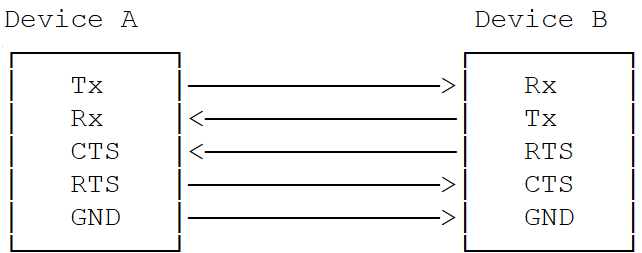
Key Parameters
- Baud rate — Communication speed (bits per second)
- Start/Stop bits — Frame delimiters
- Parity bit — Optional error checking
- Data bits — 5–9 bits per frame
- Flow control — Hardware handshaking via CTS/RTS

Transfer Modes by Subsystem
Interface Components
Device Tree Sources
APIs
Software Configuration
Linux Device Tree Example
4-wire UART (with flow control):Kernel Configuration
Verification
1
Verify UART device registration
2
Configure UART settings
3
Run loopback test
Open two SSH terminals.Terminal 1 (write):Terminal 2 (read):
Debugging
Troubleshooting
UART Device Not Detected
UART Device Not Detected
- Verify device tree status is
"ok" - Confirm
CONFIG_SERIAL_QCOM_GENI=y
Data Transmission Failures / Garbled Data
Data Transmission Failures / Garbled Data
Permission Denied
Permission Denied